Episode 178
Why Payments Can't Be Probabilistic, with Radha Suvarna, Finastra


Listen on


The three fractures that keep bank payments from feeling like fintech: #
Radha Suvarna, Chief Product Officer of Payments at Finastra, opens by naming the gap between a digital bank’s experience and a traditional bank’s: it isn’t ambition; it’s architecture. He frames legacy payment fragmentation across three vectors: inconsistent customer experience (the same $10,000 transfer can trigger different fraud checks depending on which rail carries it), operational redundancy (separate teams, separate screens, no shared view when a payment stalls), and a rising total cost of ownership from duplicating fraud logic and core banking connections across every rail.
Why a “clean sheet” rewrite is the wrong goal: #
Suvarna is direct that a full legacy-to-modern migration isn’t realistic for a bank serving live customers every day. Instead, he describes banks moving into a payment hub rail by rail, often starting with instant payments, then layering in ACH or wires once the team is comfortable, phased against near-term objectives rather than chasing a competitor’s roadmap or a vendor’s pitch.
No bank gets to stay as is, not even the smaller ones: #
Mid-market banks that historically ran payments through core banking alone are feeling the same pressure from two directions: consolidation is making them bigger, and their customers now expect the experience of a larger bank. Suvarna’s read is blunt: “payments are not getting any simpler… so if anything, it’s only going to get complicated.
The line Finastra won’t cross with AI: #
Suvarna holds a firm principle: “payments are not going to work with a probabilistic view. It has to be deterministic. It has to be precise and perfect 100% of the time.” That’s the logic behind OperatorAssist, Finastra’s AI layer that surfaces likely fixes for failed payments inside the existing operator screen, cutting average repair time by an estimated 2–3 minutes per case, without ever removing the human who validates the fix.
Why listen: #
For anyone responsible for modernizing payment infrastructure inside a bank, this episode lays out a concrete, phased alternative to the “rip and replace” myth, and a clear-eyed view of where AI earns trust in mission-critical payment operations and where it still doesn’t.
Guest Appearing in this Episode
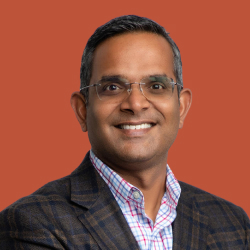
Radha Suvarna

Chief Product Officer of Payments at Finastra
A Product and Business leader with over 27 years of diversified experience across Payments, Cards, and Consumer Lending for Consumer and Commercial client segments. Built and transformed various functions and businesses across multiple geographies including U.S. and Asia. Currently the Chief Product Officer for Payments at Finastra, responsible for the overall strategy, execution and build-out of payment processing engines and Financial messaging solutions.


Copy link
More podcasts

Stay ahead of fintech.
Harvest, expert interviews, podcast episodes, and selected industry updates—usually one email per week.